
English| EUR
Suggested for you
More currencies
Choose a language
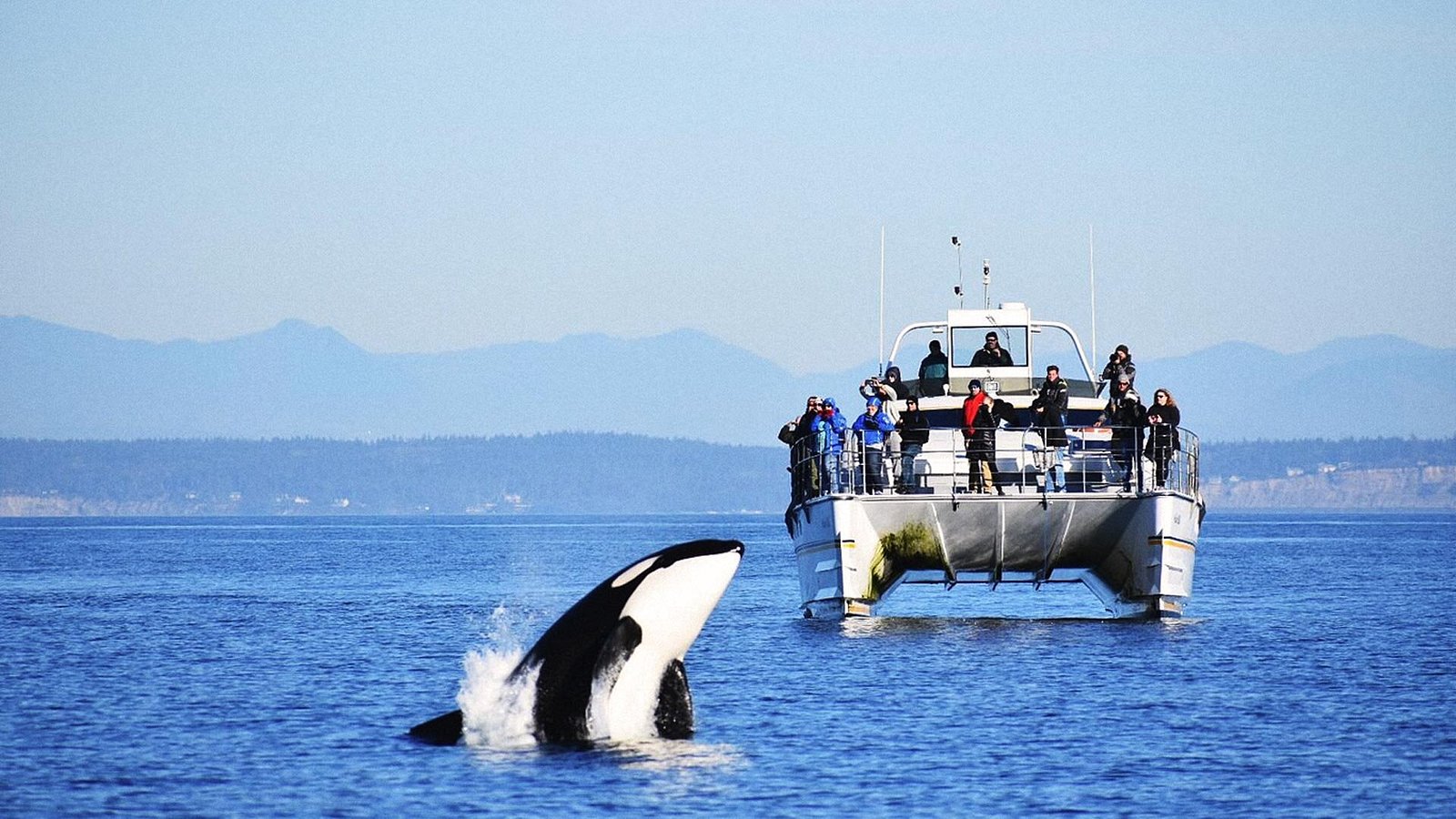
The Pacific Northwest's resident and transient orca pods follow salmon runs and seasonal migration corridors that bring them into the Salish Sea between late spring and early fall. Timing a visit to Orcas Island around these windows—and understanding the difference between peak season and peak sightings—determines whether you spend three hours scanning empty water or watching a superpod surface fifty yards from the bow.
Quick answer
The orcas island whale watching season spans April through October, with the highest concentration of sightings occurring between mid-May and mid-September. Southern Resident orcas follow Chinook salmon into the San Juan Islands during this window, while transient Bigg's orcas hunt marine mammals year-round. July and August offer the most tour departures and the calmest sea conditions, though May, June, and September often deliver equally strong sightings with smaller crowds.
The Southern Resident orca population—comprising J, K, and L pods—spends roughly 60 percent of its time in the Salish Sea between May and September, a pattern driven entirely by Chinook salmon availability. When Fraser River Chinook begin their spawning run in late spring, the whales follow, concentrating in Haro Strait, Boundary Pass, and the waters west of San Juan Island. Orcas Island sits at the eastern edge of this corridor, close enough that most commercial whale watching tours reach prime habitat within thirty minutes of leaving Deer Harbor or West Sound. Transient orcas—technically a separate ecotype called Bigg's killer whales—operate on a different calendar. These marine-mammal hunters move through the San Juan archipelago year-round, their presence tied to harbor seal pupping cycles and seasonal concentrations of sea lions rather than salmon. Winter sightings are rare but not impossible; a January tour may encounter a transient pod ambushing seals near Sucia Island or patrolling the kelp beds off the west shore. The orcas island whale watching season, however, refers to the operational window when tour operators run daily departures and the probability of an encounter exceeds fifty percent. Weather shapes the experience as much as whale behavior. April and early May bring longer daylight and returning salmon, but also wind, chop, and cold spray that turns a three-hour trip into an endurance test. Mid-May through June offers a sweet spot: the resident pods are present, the water is calmer than March, and tour boats are not yet running at capacity. July and August deliver the most predictable conditions—flat mornings, warm afternoons, and near-guaranteed sightings—but also the highest passenger volume and premium pricing. September extends the season with fewer boats, stable weather, and orcas still tracking late-run salmon before dispersing south in October. Gray whales and humpbacks occasionally appear in the spring migration window, traveling north along the outer coast and sometimes cutting through the islands. Minke whales, harbor porpoises, and Dall's porpoises are year-round residents. The distinction matters: a whale watching tour in the San Juans is fundamentally an orca search, and the months that maximize that chance are the ones that align human schedules with salmon migrations and sea state.
“The Southern Resident orca population spends roughly 60 percent of its time in the Salish Sea between May and September, a pattern driven entirely by Chinook salmon availability.”
Information regarding whale watching on Orcas Island is accessible 24 hours a day, seven days a week. While informational resources remain available continuously, actual whale watching tours operate based on specific scheduled departures.
Access to Orcas Island is free of charge for all visitors. Whale watching excursions require booking a separate paid tour with a private operator.
Verdict: A typical adult pays 0 USD to access the island, with total costs determined by the specific whale watching tour provider selected.
Orcas Island is located in the San Juan Islands, accessible primarily via the Washington State Ferries system. Travelers typically depart from the Anacortes Ferry Terminal to reach the island.
Washington State Ferries from Anacortes to Orcas Island
Drive onto the ferry at Anacortes terminal
Skagit Transit Route 40X to Anacortes Ferry Terminal
The best arrival window is 07:00–12:00. Morning departures often offer calmer water conditions and better wildlife viewing opportunities.
Prepare for your whale watching experience with advance bookings and the right gear to stay comfortable on the water.
Everything you need to know about orcas island whale watching season
The peak period for viewing marine mammals in this region generally runs from spring through early autumn. Visitors often find the most consistent sightings of transient orcas and humpback whales during the summer months.
Per our arrival recommendations, the best time to arrive is between 07:00–12:00. Morning departures frequently benefit from calmer water conditions and higher visibility for spotting wildlife.
There is no cost to enter the island area itself, as entry is 0 USD. Please note that while access to the docks is free, actual whale watching tours require a separate paid booking.
Most operators welcome families, though it is important to check specific age requirements with your chosen tour provider. Bringing young children requires careful planning to ensure their comfort during time spent on the water.
We recommend reviewing the official site at https://visitsanjuans.com to find licensed local tour operators. You can then navigate to their individual booking pages to secure your reservation directly.
Guests should prepare for cooler temperatures on the water even during the summer. We recommend dressing in layers and bringing binoculars, sunscreen, and a camera to enjoy your time on the Salish Sea.
Orcas Island Whale Watching Tours & Excursions
Read more Tickets & toursPrivate Whale Watching Tours Orcas Island
Read more GuideCan You See Orcas from Orcas Island?
Read more Tickets & toursOrcas Island Kayak Whale Watching Tours
Read more GuideWhere to See Whales from Shore on Orcas Island
Read more