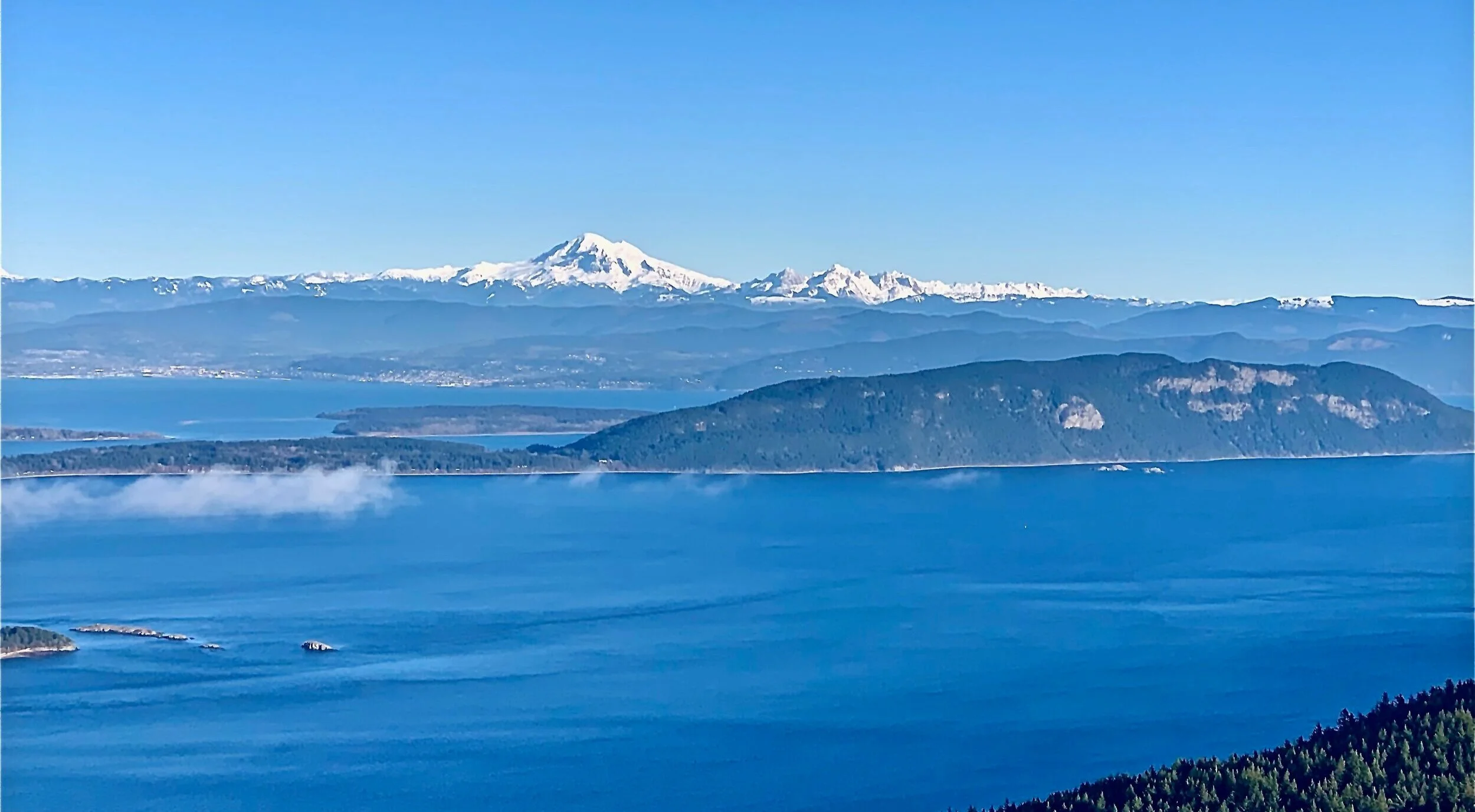
Mount Constitution
Early morning to mid-day
The summit provides a high-elevation panoramic view of the Salish Sea and surrounding islands.

Orcas Island's western and southern coastlines offer some of the San Juan archipelago's most reliable land-based whale sightings. This guide maps the accessible viewpoints, explains the tidal and seasonal factors that bring pods close to shore, and shows you how to time your visit for the highest probability of encounters.
Quick answer
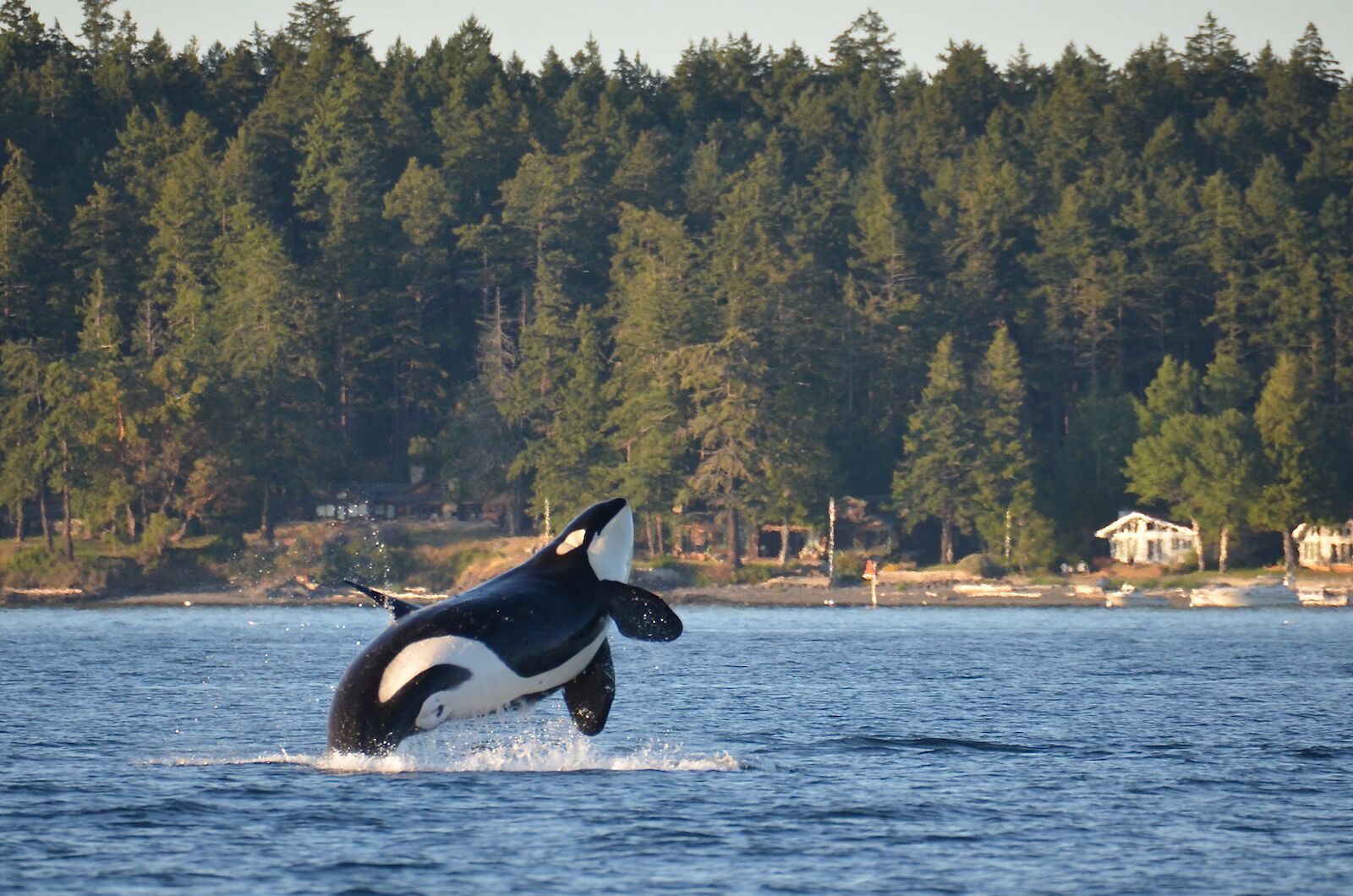
Orcas Island whale watching from shore is most productive from late April through October, with peak sightings between May and September when resident and transient orca pods hunt along the kelp-lined western coast. Lime Kiln Point on neighboring San Juan Island holds the regional reputation, but Orcas delivers comparable encounters at Obstruction Pass, Pt. Doughty, and the Moran State Park shoreline overlooks—especially during the early morning slack tide window when marine mammals surface frequently in calm water.
The southern resident orca population follows Chinook salmon through Haro Strait and the inter-island passages from spring through early autumn, bringing the pods within a half-mile of Orcas Island's rocky points and kelp forests. Transient orcas, which hunt seals rather than fish, patrol year-round but surface unpredictably. Humpback whales have returned to the Salish Sea in increasing numbers since 2010, and their tendency to linger in feeding zones makes them the more reliable sighting from a fixed shoreline position. Orcas island whale watching from shore requires patience, optical equipment, and an understanding of how tide and wind shape visibility. Flooding tides push baitfish toward shallow reefs, drawing predators into the littoral zone. Outgoing tides create nutrient upwellings at headlands, concentrating plankton and the species that feed on them. Wind above twelve knots generates whitecaps that obscure blows and dorsal fins, so mornings with offshore flow offer the cleanest sight lines. Binoculars rated at least 8x42 are necessary; a spotting scope on a tripod extends effective range to two miles. The western shoreline from Pt. Doughty south to Deer Harbor provides the widest field of view across President Channel and Boundary Pass, the corridors most heavily trafficked by northbound pods. Obstruction Pass on the southeastern tip faces San Juan Channel, where transient orcas ambush harbor seals near the navigation markers. The Cascade Lake outlet trail in Moran State Park descends to a gravel beach with unobstructed southern exposure; this zone sees less human traffic than the summit overlooks and allows extended observation sessions without crowding. Successful shore-based whale watching depends on mobility. A single viewpoint rarely holds productivity for more than an hour. Pods move at four to six knots when traveling, and a group visible from Pt. Doughty will round the northern cape and disappear within twenty minutes. Monitoring multiple sites across a morning increases encounter probability. The Whale Museum's sighting network and local VHF radio chatter provide real-time reports, but shore observers should expect to invest two to four hours per sighting during peak season. Outside the May-to-September window, humpback activity continues through November as they exploit late herring runs, though orca encounters drop sharply after October.
“Transient orcas patrol year-round but surface unpredictably, while humpbacks linger in feeding zones—making them the more reliable sighting from a fixed shoreline position.”
The peak window for viewing marine life from the shore of Orcas Island spans from mid-spring through early autumn. Early morning hours consistently provide the most favorable conditions for observation.
Mild, 50-60°F
Migrating gray whales are sometimes spotted during these months. Activity is higher during calm, early morning sea conditions.
Warm, 60-75°F
Resident orcas and porpoises are most active. Early morning offers clearer visibility before afternoon winds increase.
Cool, 50-65°F
Waters remain productive for marine mammals. Reduced visitor numbers provide quiet observation periods.
Verdict: For the highest probability of sightings, visit during the early morning hours throughout the peak months of June to September.
Access to shoreline viewpoints on Orcas Island is available daily throughout the week. The facilities maintain consistent operational hours to accommodate land-based observation.
Early morning to mid-day
The summit provides a high-elevation panoramic view of the Salish Sea and surrounding islands.
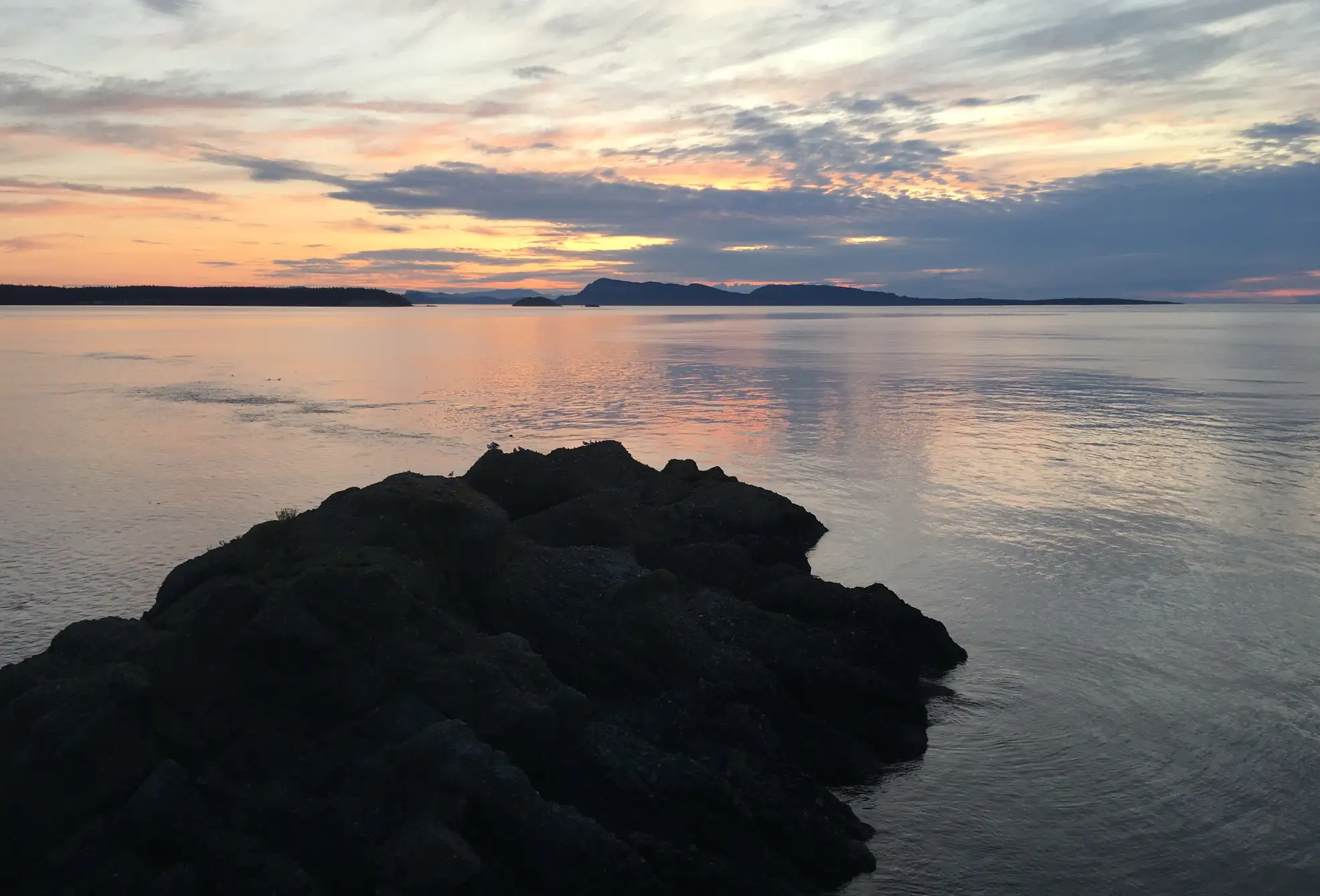
Early morning during high tide
This northern tip offers a rugged shoreline vantage point known for deep water access.
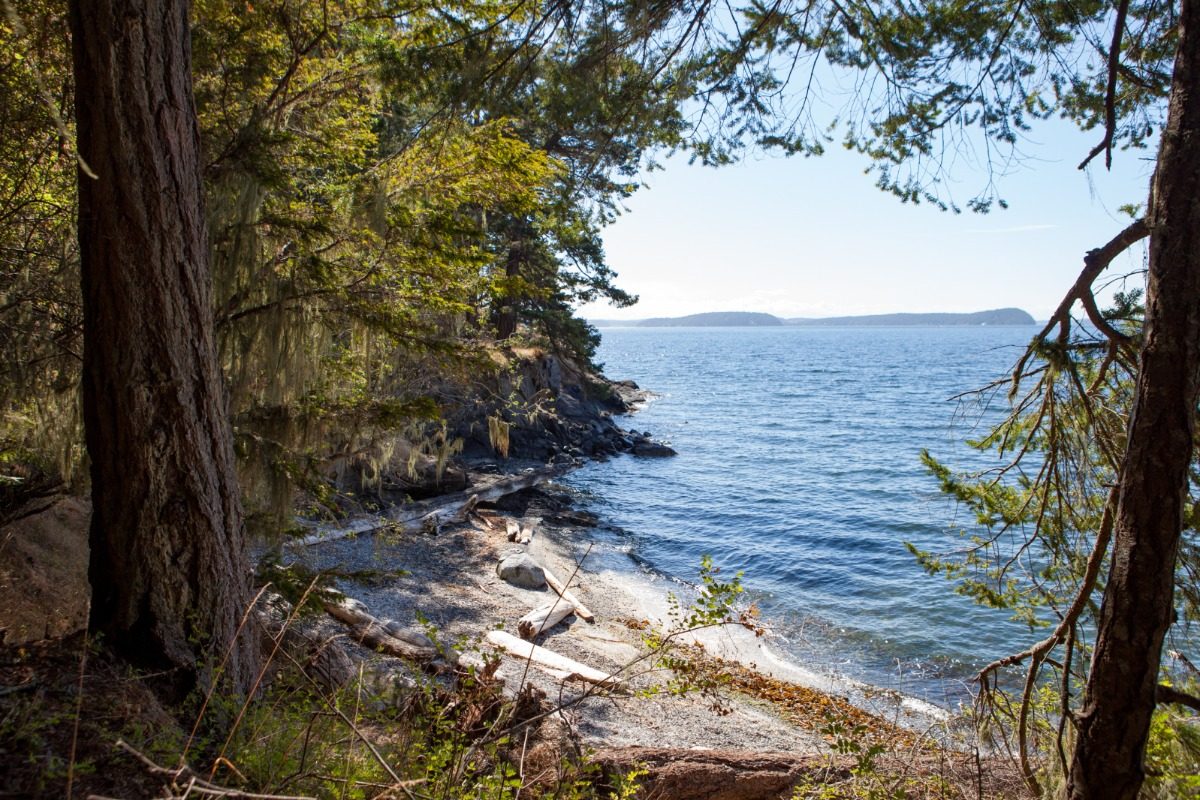
Early morning or calm days
A secluded coastal area with narrow passages often used by marine mammals.
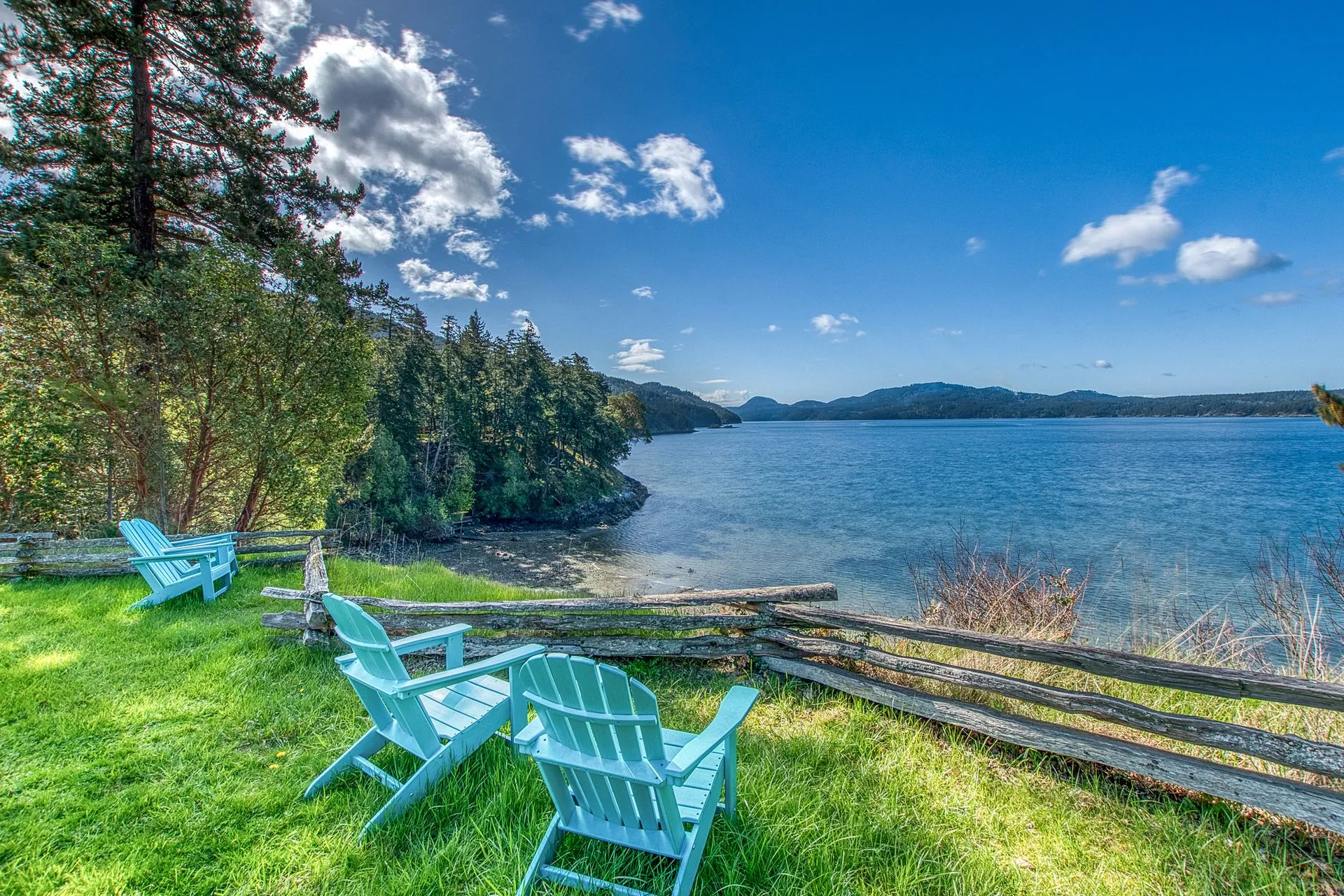
Early morning at low tide
The eastern shoreline provides sheltered waters that occasionally attract feeding marine life.
Effective shore-based observation requires patience, specific optical tools, and an understanding of marine behavior to increase your chances of spotting cetaceans.
Wear high-quality polarized sunglasses to cut surface glare, which allows you to see deeper into the water column where whales may be traveling.
Focus your eyes on the horizon for vertical plumes of mist or spray, as this is often the first and most visible sign of a whale surfacing.
Distinguish between behaviors such as spy-hopping, where the whale pokes its head vertically out of the water, and tail lobbing, which indicates active surface feeding.
Use binoculars with a lower magnification, such as 7x or 8x, because high-power lenses amplify handshake and make it difficult to track moving targets from a stationary position.
Watch for large gatherings of seabirds diving or circling in one area, as they frequently congregate over bait balls that also attract marine mammals.
Avoid constantly scanning back and forth; instead, pick a fixed sector of the water and observe it consistently for several minutes before moving your focus.
Prepare these essentials to maximize your chances of spotting orcas and other marine wildlife from Orcas Island's shoreline viewpoints.
Everything you need to know about orcas island whale watching from shore
Yes, while sightings depend on marine mammal movement, visitors often scan the Salish Sea from various public vantage points. Observing from land provides a peaceful way to connect with the local ecosystem without needing a vessel.
The best arrival window is 06:30–10:00, as early morning offers calmer water conditions and fewer crowds at popular shoreline viewpoints. Targeting these hours increases your chances of spotting dorsal fins or blows against a quiet surface.
You will need a daily vehicle permit for Moran State Park, which costs 10 USD. This fee grants access to park facilities and trails that lead to elevated coastal views.
Shoreline areas within park boundaries or public beaches provide the most reliable access for spotting. Utilizing high-powered binoculars helps visitors monitor the horizon for signs of transient or resident pods.
This activity is excellent for families because it allows for flexible schedules and movement. Children can enjoy the outdoors while parents maintain a patient watch for marine life along the coastline.
Pack binoculars, layers of clothing for changing weather, and a field guide to identify different species. Having a comfortable seat and a thermos will help you stay patient during long observation sessions.
Many visitors fail to plan for the time required to spot elusive wildlife, expecting an immediate encounter. Patience and monitoring the water for extended periods are essential for a successful experience.
Yes, the island remains accessible daily from 06:30–21:00, allowing for land-based observation throughout the year. While migration patterns vary, the shoreline is open for public use during all operating hours.
Orcas Island Whale Watching Tours & Excursions
Read more Tickets & toursPrivate Whale Watching Tours Orcas Island
Read more GuideCan You See Orcas from Orcas Island?
Read more GuideOrcas Island Whale Watching Season & Best Times
Read more Tickets & toursOrcas Island Kayak Whale Watching Tours
Read more