6 hr
Lime Kiln Kayak Adventure
Paddle prime orca habitat along San Juan Island's wild west coast, scanning for whales and eagles.
Reserve
Hand-picked by our editors — only the best 5 experiences from 28 reviewed.
Verified partners for every tour, free cancellation where available, and instant confirmation on every booking.
6 hr
Paddle prime orca habitat along San Juan Island's wild west coast, scanning for whales and eagles.
Reserve
3 hr
Paddle to a remote coastal sanctuary, watch seals and eagles, then explore a secluded beach with mountain views.
Reserve
3 hr 30 min
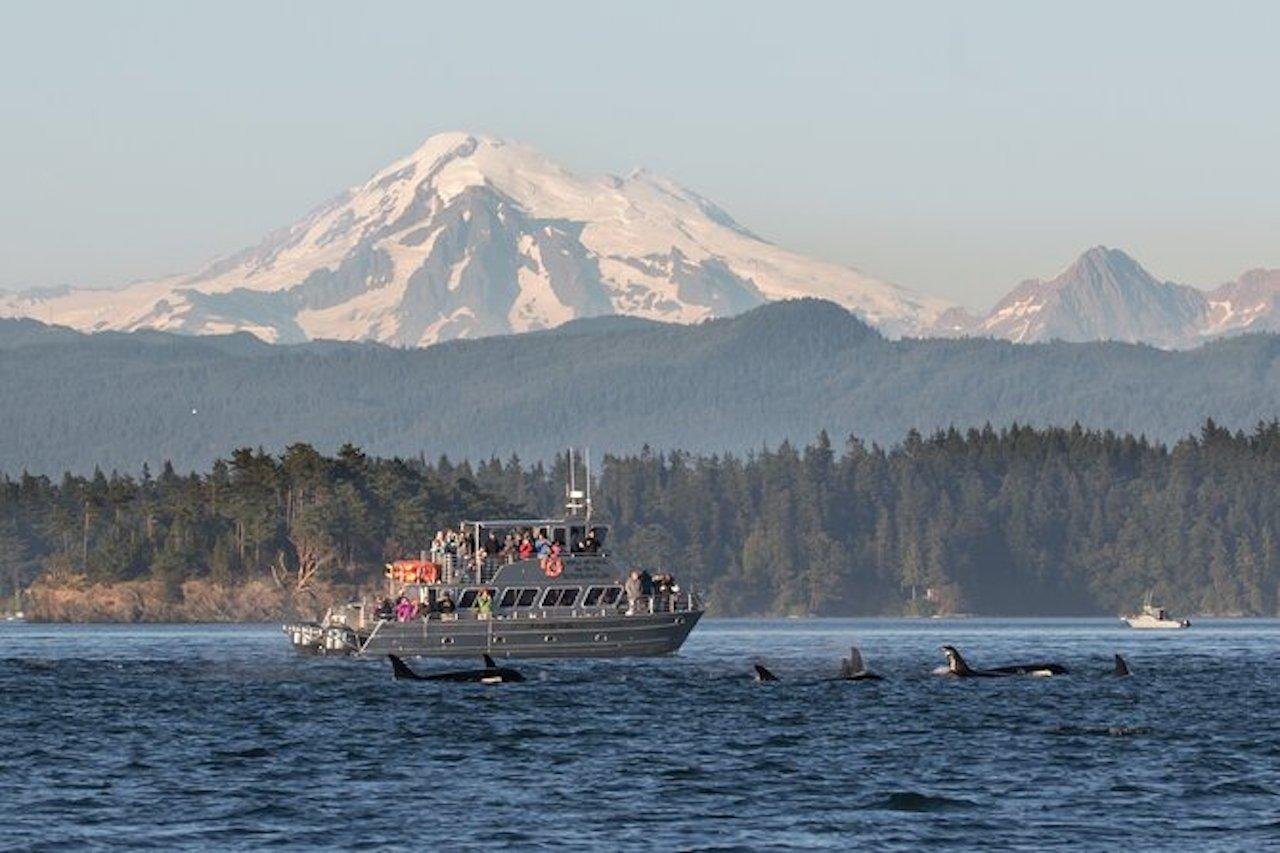
High-speed search for orcas, humpbacks, and gray whales with a 98% sighting success rate
ReservePrices from verified partners. Availability updates in real time at checkout. Free cancellation policies apply where shown.
The landmarks, rooms, and views travelers on this tour remember — all visible on a single visit.
Accessible only by water, this location offers dramatic views of the northern islands and Canada.
View of Point Doughty
A historic site serving as a gateway to coastal kayak routes.
Historic Rosario Mansion entrance
Often called the crown jewel of the San Juan Islands.
Sucia Island coastline
Home to spectacular sunsets and a popular departure point for coastal tours.
Sunset at West Beach
A scenic area featuring hidden beaches and dense forests.
Obstruction Pass trail view
Kayaking provides a silent, intimate connection with the marine ecosystem, whereas motorized boat tours excel at covering vast distances to locate pods. They complement each other; most visitors who do both call the motorized boat the more efficient choice for wildlife spotting, while the kayak experience is deemed more serene.
| Feature | Top pick Kayak Tour | Motorized Boat |
|---|---|---|
Immersion level |
High — at water level | Moderate — deck view |
Wildlife proximity |
Very close – non-intrusive | Regulated distance — motor noise |
Physical exertion |
High — active paddling | Low — seated passenger |
Range of travel |
Limited — coastal focus | Extensive — open water |
Noise level |
Silent — minimal disturbance | High — engine noise |
Accessibility |
Physical fitness required | Accessible for most |
| See tickets → |
Verdict: Choose the orcas island kayak whale watching tour for a tactile ocean connection, or select motorized orcas island kayak whale watching tickets if you prefer comfort and search speed, noting that those purchasing orcas island kayak whale watching tours should prioritize physical readiness.
Choose your ticket, select your date, and reserve in under two minutes. Secure checkout handled by our verified partner.
Instant confirmation by email, with a mobile voucher you can save offline. No printing, no queuing at a collection desk.
Arrive at the entrance, show your voucher on your phone, and walk in. Most tickets include priority or skip-the-line access.
Practical details for your visit straight from our verified partners — hours, access, rules, and how to get there.
414 North Beach Rd, Eastsound, WA 98245
Central island pickup point
Drive to Anacortes Ferry Terminal for transport to Orcas Island.
Limited island bus service; bike or car rentals are recommended.
Wear multiple warm, moisture-wicking layers including a fleece or sweater. A waterproof and windproof jacket is essential for protection against sea spray and changing conditions on the water.
Keep personal items in a small dry bag if possible to protect them from moisture. Avoid bringing large luggage as space on vessels and in kayaks is strictly limited.
Bring a camera in a waterproof housing or dry bag to prevent salt spray damage. Please refrain from using mobile phones for calls during the tour to respect the wildlife and other guests.
Many operators provide kayak tours accessible to beginners with safety orientations. Please note that vessel boarding may require navigating docks and varying tide levels.
Mobile phones should be used for photography only and kept silent during the orcas island kayak whale watching tour. Signal may be inconsistent in remote coastal areas.
Children are welcome on many tours, though age minimums may apply for certain kayak experiences. Ensure minors are accompanied by an adult at all times during your orcas island kayak whale watching tour.
Bring a reusable water bottle and pack a light lunch or snacks. Ensure all food items are easy to eat on the water as boat movement can make eating challenging.
Pets are generally not permitted on guided kayak or whale watching excursions. Please contact the operator in advance for specific service animal policies.
Orcas Island kayak whale watching tickets often sell out during the peak summer months. We recommend checking in at least 30 minutes before your departure time.
Best time to go, insider tips, nearby landmarks, and the cancellation fine print — flip through to skim what matters to you.
How crowds, weather, and events shift across the year.
Mild weather with improving chances for whale activity and calmer coastal waters.
Peak season for orcas island kayak whale watching tours with the highest sighting frequency.
Cooler temperatures and quieter waters, ideal for experienced paddlers.
Limited tour availability; focus is on resident wildlife and scenic coastal views.
Small details that turn a good visit into a great one.
Secure your orcas island kayak whale watching tickets at least two weeks in advance.
Align your orcas island kayak whale watching tour with favorable tide charts.
Prepare for significant temperature drops on the open water.
Bring ample water for the duration of your trip.
Maintain the required distance from all marine mammals during your expedition.
Non-bookable sights within a short walk — free to visit, easy to pair.
Extensive trail system including Mount Constitution.
Features primitive trails and views of the Salish Sea.
Secluded beaches and dense forest trails.
Scenic coastal area popular for sunrise and quiet reflection.
Flexible, no hidden fees.
Full refunds are typically available for cancellations made at least two weeks in advance, minus a 15 USD processing fee. Tours canceled within 72 hours are non-refundable unless the operator can resell the space.
Hand-picked options within walking distance — pick a district for vibe, or a specific hotel for convenience.
Resort offering cabin and camping options on the water.
Convenient lodging located in the heart of Eastsound.
Historic mansion resort with expansive views and spa facilities.
Orcas Island sits at the confluence of three marine channels that funnel more than eighty resident and transient orcas through Haro Strait and Boundary Pass each summer. The island's western shore faces Lime Kiln Point, a rocky headland that marine biologists call the best land-based whale-watching site in North America, but the true encounter happens from a kayak. A paddler drifts twenty meters from a surfacing J-pod matriarch, hears the exhalation through her blowhole, watches the dorsal fin slice past in silence. No engine noise. No cabin glass. The Salish Sea delivers what few coastlines can: predictable access to apex predators in open water, mediated only by a hull seven millimeters thick. Orcas island kayak whale watching tours launched in the early 1990s, when the San Juan Islands transitioned from logging and fishing economies to ecotourism. The resident Southern Resident orca population — three pods totaling seventy-three individuals as of 2026 — migrates through these waters from May through October, trailing Chinook salmon runs. Transient Bigg's orcas, which hunt seals rather than fish, appear year-round. Guides track both populations via hydrophone and coordinate with the Whale Museum's sighting network to position kayakers along predicted routes. The protocol is strict: no approach within two hundred yards, engines off within four hundred, paddles stilled when a pod surfaces within visual range. The orcas, indifferent to fiberglass and neoprene, often close the distance themselves. The island's kayaking infrastructure centers on Eastsound, a harbor village on the northern crescent, where outfitters launch from sand and gravel beaches that shelve gradually into thirty-foot depths. Most orcas island kayak whale watching tour routes track west through Deer Harbor, round the cliffs at Lime Kiln, and return via the kelp beds off San Juan Channel. A four-hour paddle covers eight to twelve nautical miles depending on tide and wind. Guides carry VHF radios, dry bags, and laminated species cards for the secondary cast: Dall's porpoises, harbor seals, Steller sea lions, bald eagles, tufted puffins. The water temperature holds at eleven degrees Celsius in summer, eighteen in early autumn. Wetsuits are non-negotiable. Beyond daylight hours, bioluminescent kayaking has become a signature experience. Noctiluca scintillans — a dinoflagellate that emits blue-green light when disturbed — blooms in these channels from June through September. A paddle stroke through dark water ignites a momentary constellation. Every salmon thrash, every jellyfish pulse, every orca fluke draws light from the microorganisms, turning the Salish Sea into a biological theater. The phenomenon peaks on moonless nights when cloud cover erases ambient light. Guides launch after sunset, navigate by GPS and shoreline silhouette, and return paddlers to Eastsound by midnight. The experience operates at the edge of wilderness protocol and requires intermediate kayaking skill.

"A paddler drifts twenty meters from a surfacing J-pod matriarch, hears the exhalation through her blowhole, watches the dorsal fin slice past in silence."
A step-by-step walkthrough of the visit — what you'll see, how long each stage takes, and the details that matter.
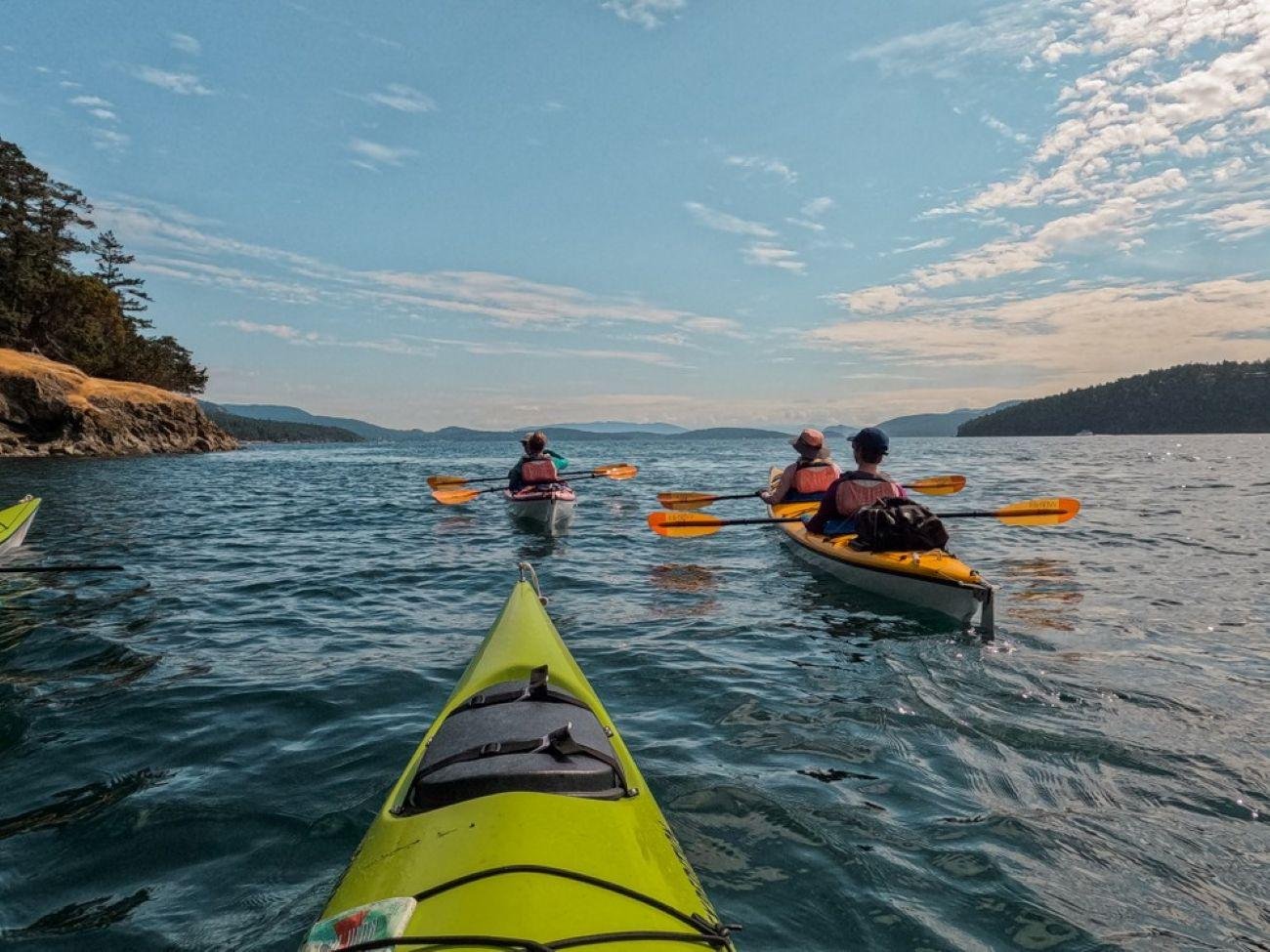
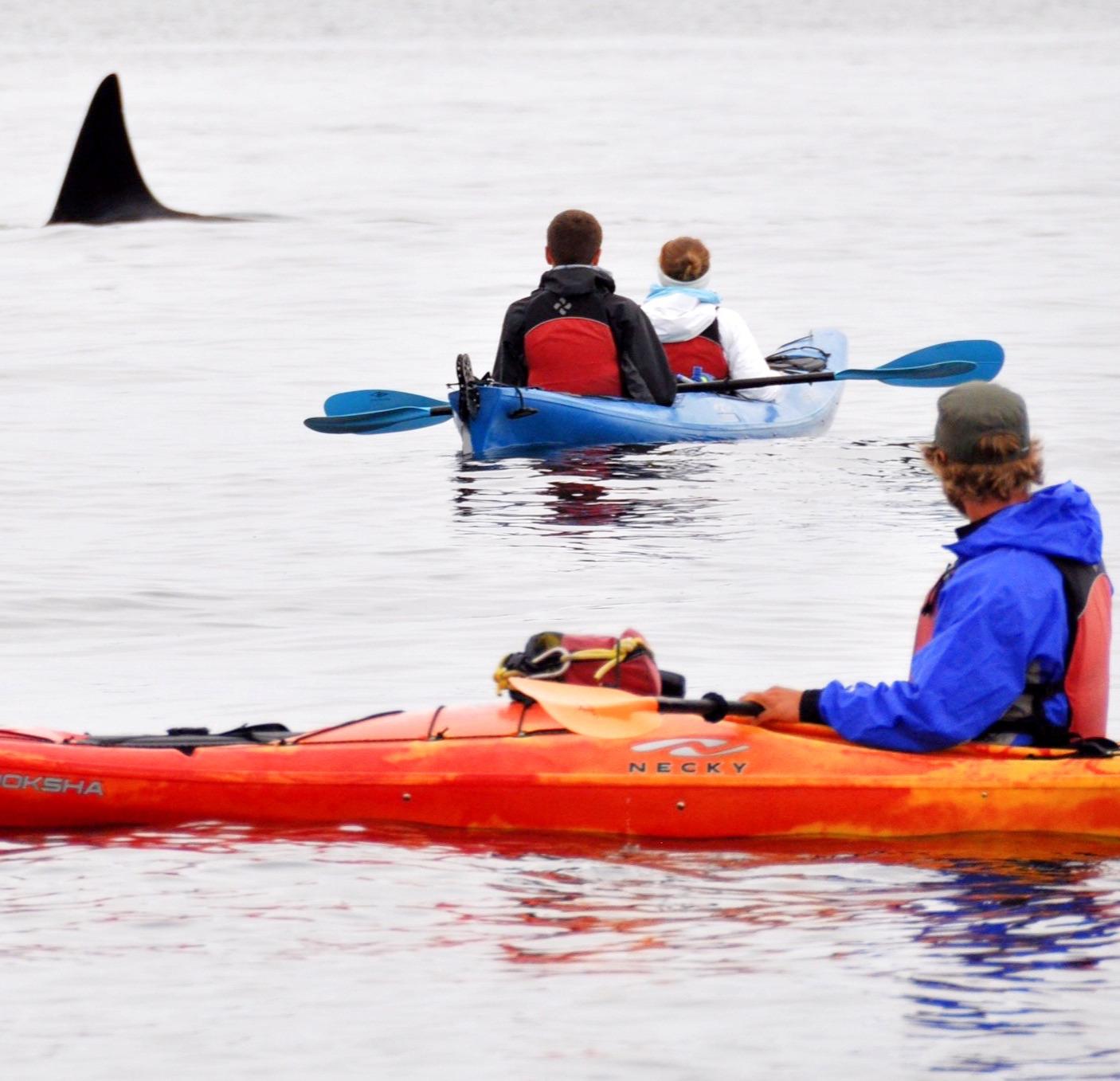
You arrive in Eastsound by mid-morning and meet your guide at the launch beach, a crescent of sand backed by madrone trees. Wetsuits are distributed by size, and you step into five-millimeter neoprene that smells faintly of saltwater and rubber. The kayaks — tandem fiberglass hulls in yellow and teal — rest on wheeled carts. Your guide reviews paddle technique, capsize protocol, and the two-hundred-yard rule, then pushes you off the beach into water so clear you can count barnacles on the rocks below. The first hour is muscle memory: catch, pull, feather, repeat. You round the headland at Deer Harbor and enter open channel, where the fetch picks up and small waves slap the hull. Your guide raises a fist — the signal to stop paddling — and points west. Three dorsal fins, each taller than your paddle, cut the surface four hundred meters out. The orcas are traveling, not hunting, and they angle closer. You hear the blows before you see the backs: sharp exhalations, then the black slope of the dorsal rising and falling in rhythm. The pod passes within thirty meters. You do not move. One calf breaches, twisting in midair, and slaps down in a white explosion. The sound carries across flat water. You paddle another two hours, past kelp forests where harbor seals haul out on submerged rocks, their heads bobbing like buoys. A bald eagle lifts from a snag with a fish in its talons. By the time you return to Eastsound, your shoulders ache and your hands are stiff, but the image of that dorsal fin holds: clean geometry against gray water, closer than any boat could take you.
The peak season for sightings is mid-June through early September, though orcas can be found in the Salish Sea year-round.
No, while professional guides optimize your experience, wildlife sightings are natural and cannot be guaranteed.
Bring warm layers, a waterproof jacket, sunscreen, sunglasses, and a reusable water bottle.
Most excursions last between 2 and 5 hours depending on the specific package selected.
Yes, these tours are often family-friendly, though check with your provider regarding specific age requirements for kayaking.
Yes, tickets can be booked through the official site https://orcaswild.com for convenience.
Check-in is typically at the Eastsound office or Rosario office as specified in your booking confirmation.
In the event of operator cancellation due to weather, you are usually offered a reschedule or a full refund.
Yes, you can combine your trip with visits to Moran State Park or Turtleback Mountain Preserve for a full island experience.